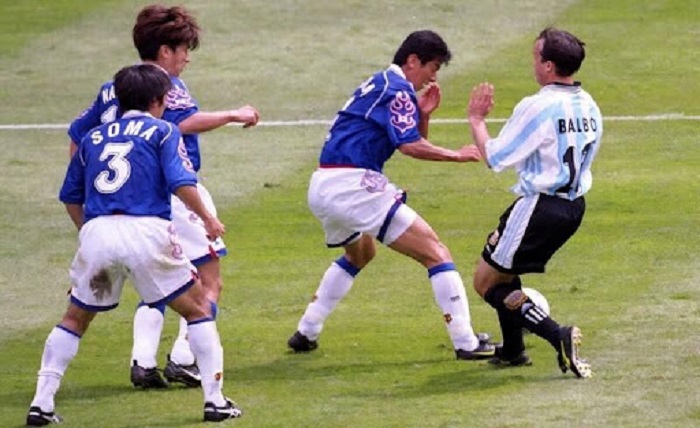
When Japan made their World Cup debut in 1998, few expected the team to face such humble conditions behind the scenes. Players shared rooms, washed their own kits, and operated with one of the smallest budgets in the tournament. Despite the struggles, they represented a turning point for Asian football. Today, fans can relive those historic moments on XoilacZ, the free livestream destination for football in Vietnam.
Japan’s road to their first World Cup
The journey to France 1998 marked a new chapter in Japanese football. Until then, the country had never appeared on football’s biggest stage.
The Japanese team’s first footsteps toward the World Cup
A football culture still growing
In the early 1990s, Japan was still laying the foundation for professional football. The J-League, Japan’s first professional league, had only been established in 1993. Most clubs lacked the resources seen in Europe or South America. Training facilities were basic. Scouting and youth development remained limited.
As a result, many national team players came from semi-professional backgrounds. They had talent and passion, but lacked exposure to elite-level competition. Japan was not yet seen as a serious footballing nation.
Qualification drama and a historic ticket
Japan’s qualification was anything but smooth. The final step came through a dramatic playoff against Iran in 1997. In extra time, Masayuki Okano scored the golden goal that sent Japan to France.
That moment sparked nationwide celebration. For the players and coaches, it was a dream realized. But the euphoria couldn’t mask the logistical reality. Japan entered the tournament with one of the lowest budgets. The Japan Football Association (JFA) was still developing its international infrastructure.
Must Read: Today Scores, Stats and Highlights on Ca Khia TV
Inside the 1998 Japan squad’s humble reality
Reaching the World Cup was historic, but the experience in France exposed how far Japan still had to go.
Shared rooms and tight budgets
Unlike top-tier teams that booked luxury hotels with private rooms, Japan’s players bunked two to a room. The JFA couldn’t afford single occupancy accommodation for each squad member. Space was limited and privacy rare.
Despite the inconvenience, players remained focused. Veteran leaders like Masami Ihara kept team morale high. The shared rooms became places for late-night talks, tactical discussions, and team bonding.
Washing kits and team spirit
Budget limitations also affected logistics. Without enough staff, players had to wash their own kits after training. Laundry machines became part of the daily routine.
It was a humbling task. For many, it was their first time managing such chores during an international tournament. Yet, instead of complaining, the team accepted the challenge. Coaches later noted this created a unique camaraderie. Each act of responsibility reinforced unity.
Facing the global stage with grit
Japan’s group was unforgiving. Drawn alongside Argentina, Croatia, and Jamaica, the odds of progression were slim. Still, the team fought with heart.
Against Argentina, Japan lost narrowly, 0-1. The match showed discipline and effort, even without star power. Croatia proved too strong, and Japan again fell by a single goal. The final match against Jamaica was the best chance for a result. Despite dominating possession, Japan lost 1-2.
Three games, three losses. But within Japan, the narrative wasn’t failure. The experience served as a foundation. The players proved they belonged on the world stage, even without the resources of elite teams.
The impact of 1998 on Japanese football
Though the campaign ended without a point, Japan’s appearance in France changed everything. It redefined expectations and set the stage for long-term growth.
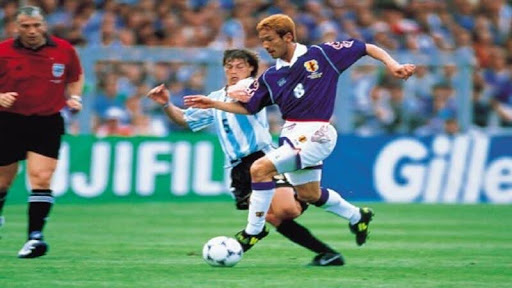
World Cup 1998 redefined hopes and sparked Japan’s football growth
From humble beginnings to regional dominance
In the years following 1998, Japan invested heavily in football development. The J-League expanded. Youth academies improved. International training became a priority.
By 2002, Japan co-hosted the World Cup with South Korea. That tournament saw the national team reach the Round of 16. The difference in preparation was clear. Players had better facilities, more experience, and greater support.
Since then, Japan has qualified for every World Cup. They’ve produced stars who play across Europe and built a reputation as one of Asia’s strongest football nations.
A blueprint for grit over glamour
What Japan showed in 1998 was more than determination. It was a model for emerging football nations. While others had luxury, Japan had purpose. They used limited means to gain valuable experience.
This blueprint resonates with countries still finding their footing in world football. Infrastructure takes time. Success isn’t always immediate. But with vision and resilience, it’s possible to compete against the best.
Conclusion
Japan’s 1998 World Cup debut remains one of football’s most inspiring underdog stories. It wasn’t about winning—it was about showing up, standing proud, and believing in the future. Their humble beginnings remind the world that the journey matters just as much as the result.
Read more about : bottleneck calculator